Product History
A Decade of DataGuard: No-Root Android Firewall Maintenance
DataGuard firewall app history from 2015 to 2026: no-root firewall app evolution through Android 13, SDK 35, 16 KB alignment, and 2.30x releases.
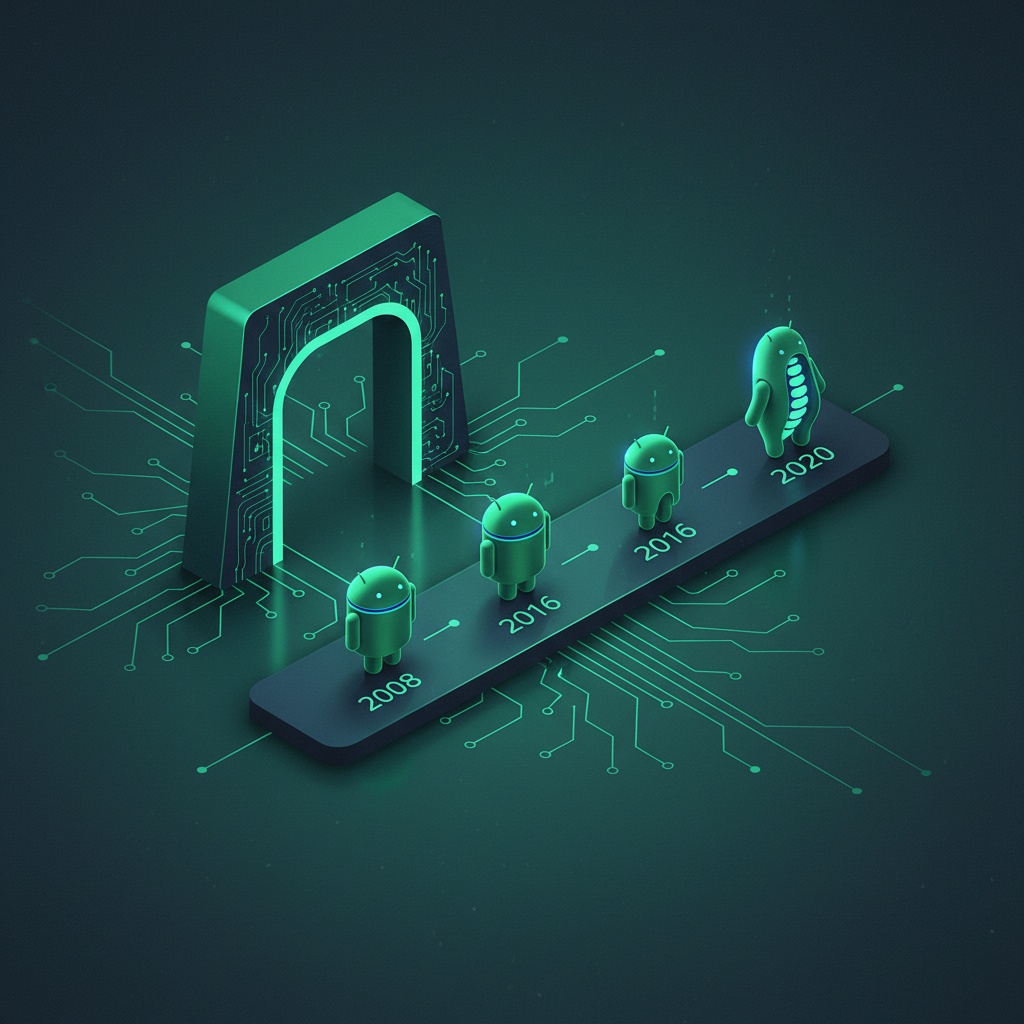
Written by the Fulldive product engineering team, based on direct inspection of the repositories listed below.
The DataGuard firewall app history is longer than most Android utility apps on the store. DataGuard No Root Firewall, package com.fulldive.extension.dataguard, is built on a codebase whose git history starts on 2015-10-24 and runs through 2026-01-23 — 3,936 commits across all refs in fulldiveVR/FulldveExtension.DataGuard. This is a post about what a decade of no-root firewall app evolution actually looks like on Android, and why a tool that does something this specific has needed so many releases.
The short story: the firewall job has not changed much, but the Android platform has changed enormously around it.
Where DataGuard came from
Parts of the codebase predate the Fulldive brand. The lineage sits in the same architectural family as NetGuard — the open-source no-root firewall that popularized using Android’s VpnService as a local packet filter. The idea is elegant: instead of requiring root to edit kernel firewall rules, put the filter in the slot Android already exposes for user-controlled network apps. We wrote up the model itself in How no-root Android firewalls work.
That “VPN as filter” design is what lets DataGuard deliver a real per-app firewall without root, and it is also what makes it sensitive to every platform change Android ships.
2015-2021: the long foundation
Most of the first six years of history are foundational firewall work — releases, FAQ updates, bug fixes, Android version support. This was the period in which the basic user experience (per-app Wi-Fi/mobile data toggles, live notification, ongoing-connection log) was stabilized. Repeated FAQ updates in this period show how much of firewall work is explaining the VpnService model to users who see the VPN prompt and reasonably ask what is happening.
2022: Fulldive module movement
In 2022, the repository picks up Fulldive-specific integration work. Commit 70133b44 moved modules from another repo and introduced the donation popup. Commit 3f814a42 bumped the target SDK and shipped version 1.0.6. This is the period where DataGuard becomes part of the Fulldive ecosystem as an explicit “extension” — the broader pattern is explained in the Fulldive company story and Fulldive extensions / forked apps.
The work is prosaic but real: making sure an older firewall codebase installs, runs, and updates alongside the rest of Fulldive’s apps.
2023: Android 13 and the 2.30x cadence
Android 13 introduced a user-facing permission for notifications (documented at Android Developers — notification permission). For a firewall this was not optional: the “firewall is running” ongoing notification is how users know the filter is alive. Commit 4165205e added Android 13 notification permissions support.
The rest of 2023 shows a fast release cadence through the 2.30x series, plus repeated FAQ updates. Releases this frequent are not about adding features; they are about keeping the app correct as Android devices in the field update through OS versions, OEM skins, and Play Store policy changes.
2024: network-change and filtering reliability
2024 was, in the commit log, a year of reliability work. Two commits stand out:
c5e9414b— rebuilt the VPN on active network change.ba0e8c22— workaround for the active network being a VPN.
Both sit at the intersection of how Android reports network state and how VpnService behaves. When a user walks from Wi-Fi to mobile data, or when Android itself already reports the active network as a VPN (which happens more often than you’d think on modern Android, where Play Services can surface various network overlays), the firewall has to rebuild itself or risk silently stopping filtering. We wrote a dedicated post on this: Why DataGuard rebuilds the VPN on network change.
Release markers 2.328 through 2.332 land in this period. On average, the repo history shows about one named release every 2.30 versions worth of maintenance — roughly the cadence of a long-lived maintained utility, not a prototype.
2025: SDK 35, 16 KB alignment, Fulldive consistency
2025 was the year DataGuard (and every Fulldive app) faced Android’s coordinated platform requirements:
- Commit
2821d5e0— SDK 35 preparation. - Commit
b2af3518— 16 KB library alignment. This is the requirement documented at Android Developers — 16 KB page size; native libraries in apps need to be rebuilt so they load correctly on devices with 16 KB memory pages. It is invisible to users when it works and breaks the app entirely when it does not. - Commit
cdc04c9f— 2.334 release. - Commit
f008c1b2— app-name consistency work, aligning DataGuard’s store/app/branding strings across the ecosystem.
These four changes together are the “modernization” that keeps a decade-old codebase eligible for the current Google Play store.
Late 2025 to early 2026: dependencies, donations, Discord
The most recent commits in scope are:
6d8b8493— dependency/versioning and donation setting work.60546414— added the Fulldive Discord community link.
These are small commits, but they are representative: a maintained app ages through hundreds of dependency bumps, and Fulldive’s support path is increasingly centralized on the shared Discord (the same link appears in One Emulator and Wize AdBlock VPN repos around the same period).
The numbers
- Repository history span: 2015-10-24 → 2026-01-23.
- Total commits across all refs: 3,936.
- Release cadence around the 2.30x series: roughly once every 2-4 weeks during active periods, as implied by the density of release markers.
- Android platform jumps absorbed: Android 13 notification permissions, target SDK 35, 16 KB page alignment, plus repeated
VpnServicebehavior accommodations.
This is what a no-root firewall app evolution looks like on Android if you keep it alive for a decade instead of retiring it every three years.
What has stayed the same
Through all of this, the core job is unchanged:
- Open a local
VpnService. - Read the UID of outbound packets.
- Apply the user’s per-app Wi-Fi/mobile-data rule.
- Show an honest ongoing notification.
Every release has preserved that basic contract. The step-by-step for users is in Block apps from using mobile data or Wi-Fi.
What this history tells users
Three takeaways if you are evaluating a no-root firewall:
- Maintenance volume matters. A firewall that is not being updated for Android platform changes will quietly stop filtering on the first network edge case its code did not anticipate. DataGuard has absorbed Android 13, SDK 35, 16 KB alignment, and active-network-is-VPN edge cases — each one is a specific commit in the log above.
- Frequent small releases are normal, not a bug. The 2.30x cadence reflects the reality that any
VpnService-based app is sensitive to both Android’s own behavior and the long tail of OEM customizations. - Honesty about scope scales better than hype. The app has kept its job small and well-defined: per-app network control, no root, no overreach into antivirus/VPN/permission-manager claims. That is covered in What Android firewalls can and cannot protect against.
Limits: what an Android firewall cannot do
For completeness in a history post: DataGuard is a per-app network filter. It does not detect malware, does not encrypt traffic to a remote server, does not hide your IP, does not manage Android runtime permissions, and does not replace a DNS-based ad blocker. For those needs, see the separate Wize AdBlock VPN (DNS filtering) or a proper tunneling VPN client, and the comparison in No-root firewall vs VPN on Android.
Where to go next
- The model: How no-root Android firewalls work.
- The engineering deep-dive: Why DataGuard rebuilds the VPN on network change.
- The honest limits: What Android firewalls can and cannot protect against.
- How DataGuard fits in the ecosystem: the Fulldive company story and Fulldive extensions / forked apps.
- All apps: Fulldive apps | About | FAQ.
Last updated: 2026-04-16. Commit hashes and version numbers are drawn from Fulldive repositories inspected on 2026-04-13.